Internal Skills Assessment Platform
Internal Skills Assessment Platform
Research, UX Strategy, IA and Prototyping
Research, UX Strategy, IA and Prototyping
This project involved designing an internal assessment platform for trainees within a technology organization. The objective was to create a structured way to evaluate workplace readiness across both technical and professional competencies.
Rather than relying on traditional tests, the platform uses scenario-based assessments to evaluate how trainees communicate, solve problems, collaborate, and make decisions in realistic work environments.
This project involved designing an internal assessment platform for trainees within a technology organization. The objective was to create a structured way to evaluate workplace readiness across both technical and professional competencies.
Rather than relying on traditional tests, the platform uses scenario-based assessments to evaluate how trainees communicate, solve problems, collaborate, and make decisions in realistic work environments.
This project involved designing an internal assessment platform for trainees within a technology organization. The objective was to create a structured way to evaluate workplace readiness across both technical and professional competencies.
Rather than relying on traditional tests, the platform uses scenario-based assessments to evaluate how trainees communicate, solve problems, collaborate, and make decisions in realistic work environments.
Traditional assessments are effective at measuring knowledge, but often provide limited insight into how individuals perform in real workplace situations. The organization needed a consistent way to evaluate competencies such as communication, problem-solving, collaboration, documentation, and decision-making across multiple trainee cohorts.
The challenge was creating an experience that could generate meaningful insights while remaining clear and easy to navigate.
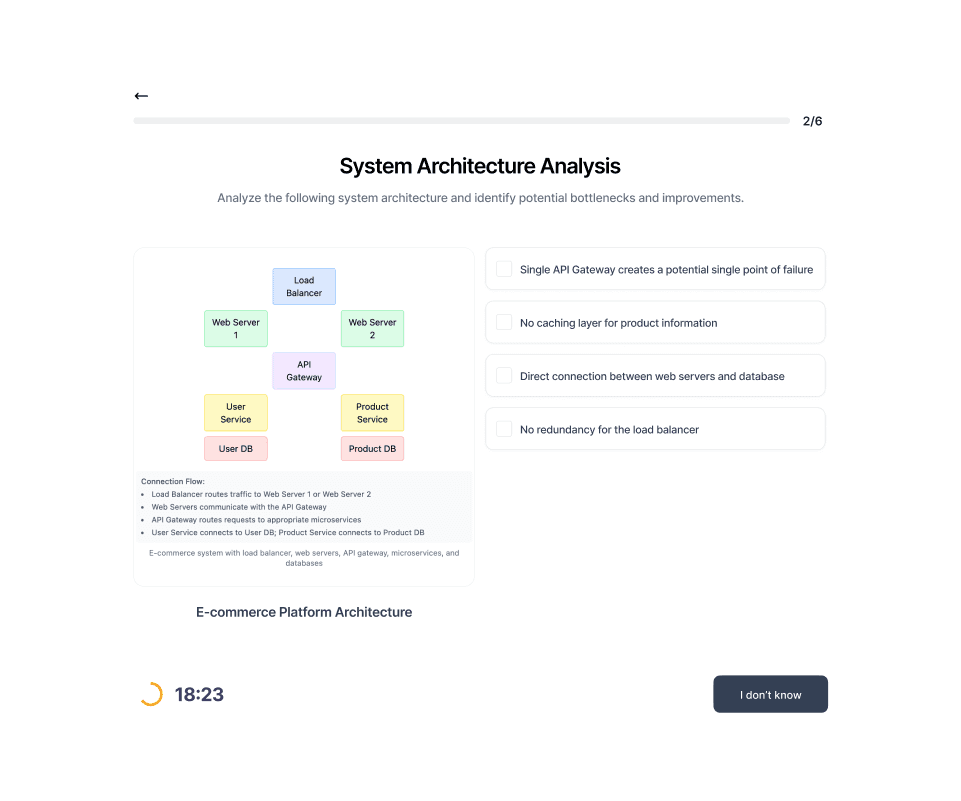
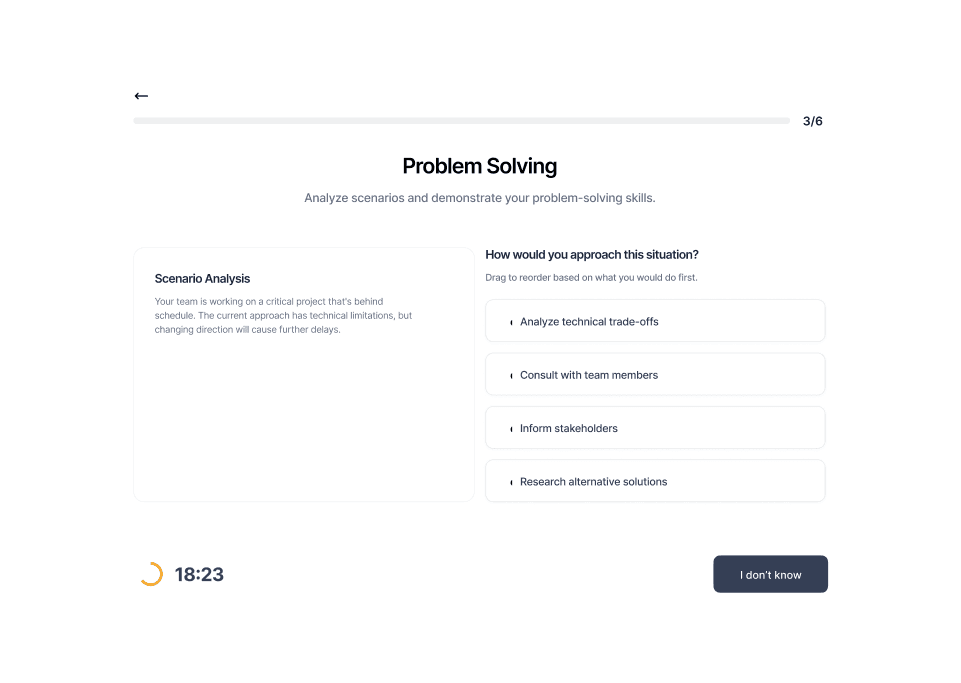
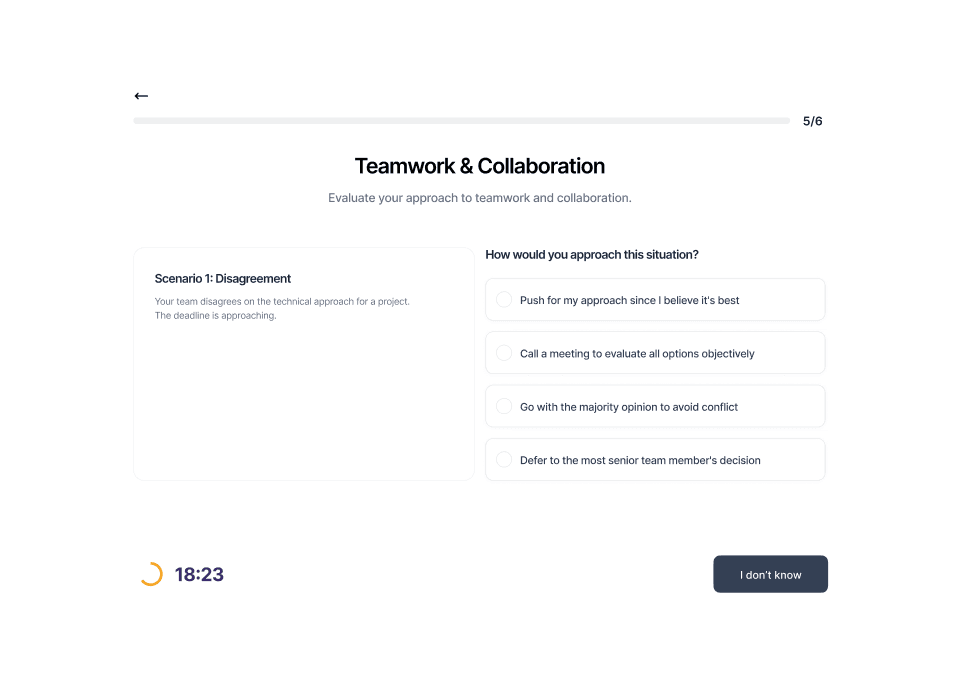
The assessment experience was designed around practical challenges that mirror everyday workplace situations.
Participants progress through a series of competency-based exercises covering technical reasoning, prioritization, communication, collaboration, documentation, and problem-solving. I designed each activity to reveal how individuals approach challenges rather than simply testing what they know.
The experience concludes with a personalized competency report that highlights strengths, identifies growth opportunities, and recommends next steps for development.
I established a foundational design system covering typography, color tokens, spacing, grids, components, and interaction patterns to create a unified visual language for seamless future purposes.
One of the most important lessons from this project was understanding how design influences confidence during evaluation.
When people know they are being assessed, even small moments of uncertainty can increase anxiety and affect performance. Clear expectations, structured guidance, and thoughtful feedback helped create an experience that felt supportive without reducing credibility.
The project reinforced that the most effective assessments helps people understand how to improve their results.